.png)


Technical Protocol: BBR Controlled Thermal Hysteresis
At Bird Box Records, "flattening" is not a forced mechanical process, but a precise intervention in polymer physics.
Vinyl (PVC) possesses an "elastic memory": our goal is to reset this memory
without altering the sonic information etched into the grooves.
Phase 1: Mass and Polymer Analysis
Not all vinyl reacts the same way. A 200g LP requires a different heat curve than a 120g pressing
from the 1970s. We identify the specific softening point to eliminate any risk of "groove damage."

Phase 2: Gradual Heating Cycle
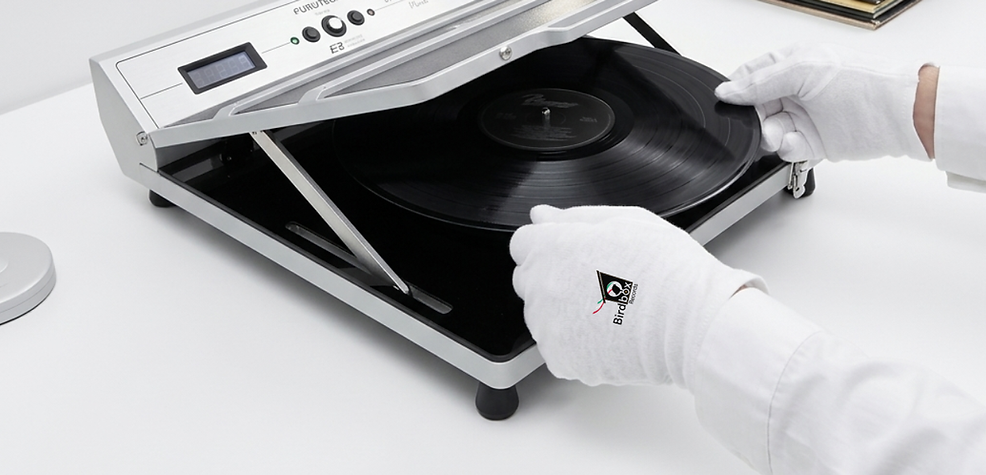
The record is placed inside a temperature-controlled chamber.
Heat is not applied suddenly; instead, it increases according to a slow ramp-up profile.
This allows the PVC molecular chains to release internal tensions
accumulated due to improper storage or past exposure to excessive heat.

Phase 3: Stabilization and Hysteresis
Once the critical temperature is reached (well below the melting point), the record is held
in a state of thermal stasis under a uniform pressure of several kilograms.
During this phase, the vinyl "forgets" the warp and conforms to the perfectly flat surface of the machine.

Phase 4: Slow Cooling (The Most Critical Phase)
Hysteresis is only completed if the cooling process is extremely slow. If vinyl cools too quickly, internal tensions return.
Our machines take up to 2 hours to bring the record back to room temperature,
ensuring the new flat shape is both permanent and stable.
Phase 5: Optical Inspection and Tracking Test
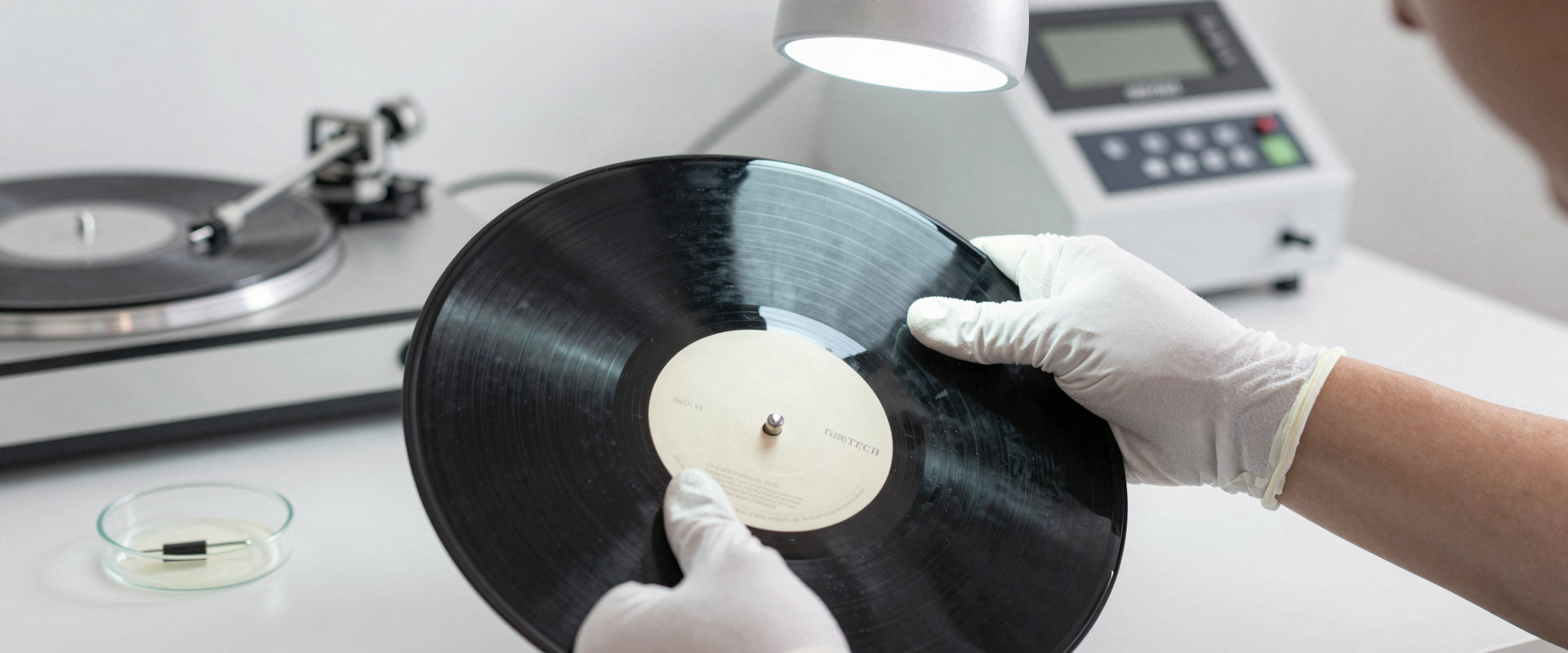
Each record is inspected under raking light to verify the total absence of residues or alterations. The final test is visual: the turntable tonearm must glide without vertical oscillations, guaranteeing optimal tracking and maximum audio fidelity.
Why is our protocol safe?
Unlike "at-home" methods (such as placing heavy glass in the sun or using kitchen ovens),
our ORB, Furutech, and Pro-Ject units operate with a precision of ±0.5°C.
This ensures that the micro-geometry of the grooves remains intact: the music you love
is never touched—only the physical structure that supports it is corrected.