.png)


Bird Box Records presents "REASON" by Alessandro Bianchini: the new analog album recorded at Nightingale Studios.

Updated: Jun 7
New analog sessions for Bird Box Records featuring Alessandro Bianchini's "REASON".
Alessandro Bianchini’s international journey continues. Following the extraordinary success of his two 180-gram vinyl releases, "10/5" and "My Space 24" — which captivated collectors and audiophiles with high-end Hi-Fi systems from the United States to Southeast Asia — the talented Italian vibraphonist has returned to the studio to breathe life into an ambitious new chapter under Bird Box Records: Alessandro Bianchini's "REASON".
Are you a true audiophile and a lover of great acoustic productions?
Discover the secrets and go behind the scenes of a fully analog recording session. Read the full article to explore how we captured the unique sound of "REASON," the new album by Alessandro Bianchini: you will find a detailed analysis of the technical choices, microphones, and tape setup.
But we don't stop at words. In addition to a rich photo gallery of the backstage action in the control room, an exclusive surprise awaits you at the end of the article: the official video of the live recording session in cinematic 21:9 format, featuring pure, direct-to-tape audio with no filters, mixing, or mastering. A true sensory journey inside Nightingale Studios.
Enjoy the read and happy listening!
Photography and video by Stefano Felice
This time, the historic walls of Nightingale Studios played host to a truly extraordinary lineup:
Alessandro Bianchini (Vibraphone)
Giulio Corini (Double Bass)
Giovanni Campanella (Drums)
Filippo Bianchini (Saxophone)
Three days of highly intensive live sessions, with the entire first day dedicated to a meticulous soundcheck. This was a fundamental choice to shape the acoustic environment well before pressing "rec," which ultimately allowed the profound human and musical chemistry among the four artists to literally set the magnetic tapes on fire over the following two days.

Studio Acoustics: Reflected Sound, Isolation, and the Control Room
In these exclusive images, we take you into the beating heart of the live room at Nightingale Studios. As you will notice, we made a radical acoustic and performance-driven choice: Alessandro, Giulio, and Giovanni performed simultaneously in the exact same room.
In modern jazz, musicians are often recorded separately in isolated booths, or even at entirely different times (overdubbing), to achieve absolute control during mixing. However, acoustic music — especially when led by an instrument as rich in resonances as the vibraphone — needs room to breathe.
Having the musicians play together in the same space offers irreplaceable benefits:
The "Groove" and Natural Interaction: The musicians can look at each other, breathe together, and react instantly to one another's dynamic nuances. The musical tempo is not driven by a digital click in a pair of headphones, but by the collective movement of air within the room.
The Instrument's Response: A double bass or drum cymbals will never sound the same in a sterile, heavily dampened booth. In our live room, the vibrations generated by the instruments interact with the stone and wood surfaces, delivering that warm, live, and three-dimensional feel that makes listening on high-end Hi-Fi systems an incredibly realistic experience. The speaker disappears, and the band materializes right in your room.
To maintain flawless sonic clarity without sacrificing this magic, the space was expertly shaped using 15 cm-thick mobile acoustic dividers. Internally, these feature two 15mm plasterboard panels, rockwool, fiberglass, and external insulation. These modules capture the most critical frequencies and minimize microphone bleed between the instruments, ensuring razor-sharp separation and perfect phase coherence on the 2-inch tape.

A strategic exception was made for Filippo Bianchini on saxophone. Given the immense sound pressure of the sax, which would have inevitably bled into and oversaturated the highly sensitive ribbon microphones on the vibraphone, Filippo was positioned inside the studio's control room.
The separation was strictly acoustic: thanks to the large, soundproof glass door, Filippo maintained direct and complete visual contact with Alessandro and the rest of the band. This allowed the quartet to preserve their expressive chemistry while ensuring flawless isolation for razor-sharp control over the saxophone's timbre during the mixing phase.

The Audio Chain: No Compromises, Just Pure Analog (AAA)
For true connoisseurs of high-fidelity sound reproduction, BBR label head Lorenzo Vella lifts the veil on the technical details, outboard gear, and microphone techniques used to capture the breathtaking three-dimensionality and dynamics of this quartet:
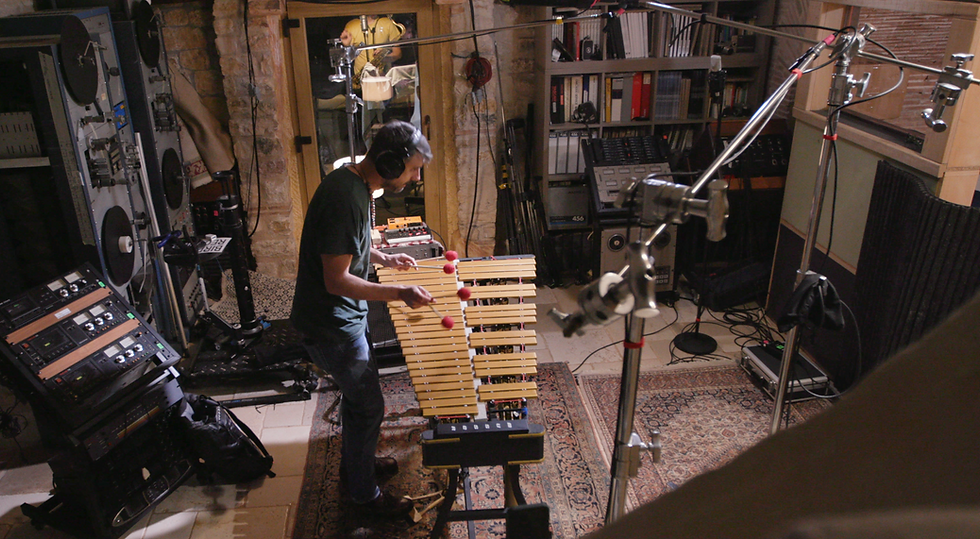
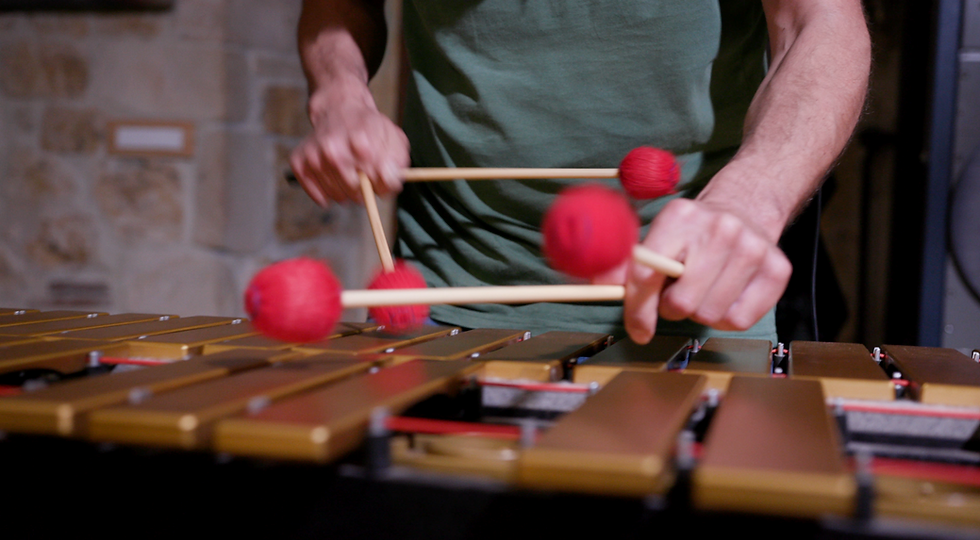
The Vibraphone and the Magic of the AEA R88: To faithfully reproduce the complex harmonic richness and the metallic yet woody body of Alessandro's vibraphone, an elite combination was chosen: CM4 small-diaphragm condenser microphones paired with an AEA R88 Active stereo ribbon microphone positioned in a Blumlein configuration.
Technical Focus – The Blumlein Technique with the AEA R88: The AEA R88 houses two ribbon elements positioned at 90° relative to one another, both featuring a figure-8 (bi-directional) polar pattern. This historic Blumlein configuration captures an extraordinarily realistic and coherent stereophonic image. Rather than just recording the instrument, the microphone maps the surrounding space in three dimensions: the front of the ribbons captures the direct timbre and sharp transients of the mallets, while the rear gathers the room's natural reflections and ambience. The result is a wide, deep soundstage completely free of phase cancellations, capable of making the speakers of your playback system literally "disappear."
The stone and wood of the historic live room did the rest, rendering a sound that is simply natural, tactile, and alive.


Preamplification: Transformer Character vs. Clinical Transparency
To handle the signal from these extraordinary microphones, the choice of preamplifiers was crucial. It wasn't just a matter of "gain," but of pure sound architecture:
The Ribbon Microphones: The AEA R88 was connected directly to AEA RPQ500 preamplifiers. This was an essential, textbook choice: passive ribbon microphones require an exceptionally high input impedance and a massive, ultra-quiet gain reserve to fully express their natural transient response—characteristics that AEA's proprietary preamps deliver to perfection.

The Condenser Microphones and the Bad Dogs Choice: For the Line Audio cardioid condenser microphones, BBR founder Lorenzo Vella opted instead for preamplifiers from the Italian brand Bad Dogs (the P1 model). These feature a Class-A transistor amplification stage paired with legendary Jensen JT-11-HFMPC output transformers.

L'eccellenza passa dai dettagli invisibili: un primo piano del modulo hardware Bad Dogs P1. In evidenza il prestigioso trasformatore d'uscita Jensen (Made in USA), un componente fondamentale per garantire la perfetta linearità di fase e quella densità armonica trasparente richiesta dagli standard della nostra etichetta.
Why Bad Dogs and Not the Classic "Big Name" Brands?
In the audiophile world and traditional recording studios, historic brands like Millennia Media are considered the absolute standard for their almost clinical, uncolored transparency. However, in a purely analog and entirely live recording like this one, absolute transparency risks turning into a sterile coldness—especially when it comes to condenser microphones.
Lorenzo Vella chose the top-tier craftsmanship of Bad Dogs precisely for the presence of the Jensen transformers and the Class-A circuitry. This combination doesn't surgically clean the sound; it sculpts it:
Harmonic Density: The Jensen output transformers introduce a subtle, highly pleasing harmonic saturation that adds body to the midrange, making the Line Audio microphones sound incredibly warm and distinctly "analog."
Transient Management: The Class-A circuitry softens the sharpest transients without losing a single shred of detail, delivering an old-school musicality and roundness.
The result is a perfect balance: the open, three-dimensional spatiality of the AEA ribbon pair on the vibraphone blends seamlessly with the dense, tactile, and exquisitely analog texture provided by the Bad Dogs preamplifiers. It is a sonically engineered synergy tailored to elevate every single nuance of the quartet.

Giulio Corini's Double Bass and the Acoustics of Vinyl:
To capture the true soul and range of Giulio's double bass, we didn't settle for a standard setup; instead, we developed a meticulous four-source microphone configuration. Microphones were placed both at a close distance and directly adjacent to the soundboard and neck. This technique allowed us to blend the detailed attack of fingers on strings with the deep resonance of the wood, delivering that "big," warm, tactile, and incredibly defined sound that has become the trademark and sonic signature of Bird Box Records productions.
The Acoustic Backstory – The Vinyl Library as a Diffuser: A fundamental role in the double bass's sound was played by a seemingly casual piece of furniture: the large shelving unit filled with BBR vinyl records located directly behind Giulio. In acoustics, the spines of records arranged in rows create an irregular surface that acts as a perfect natural diffuser. The mid-high frequencies reflected by the double bass hit this acoustic barrier, returning an extremely controlled sound—free of boominess or annoying standing waves—while remaining entirely natural and vibrant rather than anechoic or dead. The double bass breathes in a real environment, keeping its micro-dynamics completely intact.

Here is how we distributed and sculpted the sources:
The Detail of the Neck and Hands (Schoeps CMC6 + Chandler EMI TG Cassette): Positioned to capture the friction of the fingers and the transient detail of the fingerboard, the Schoeps CMC6 condenser microphone was paired with the preamplifier section of the famous Chandler Limited EMI TG Cassette.
The Attack and Definition of the Pizzicato (DPA 4099 + Vintagetools VT-N95PE): To give definition to every single note of Giulio’s pizzicato, we used a DPA 4099 clip-on microphone. The signal was then enriched by the VT-N95PE Program EQ from Germany's Vintagetools—a top-tier module equipped with original vintage Haufe transformers and based on the legendary dual-mono architecture of the 1970s and '80s Neumann W495b equalization modules.
The Body and Roundness of the Instrument (Lauten Audio Horizon LT-321): Positioned facing the soundboard, this fabulous tube microphone captured the "belly" of the double bass, delivering the warmth and acoustic three-dimensionality of the wood resonating in the room.
The Sub-Bass and Fundamentals (The Realist): To anchor the sound to the floor and guarantee a rock-solid foundation on the lowest octaves, we took the signal directly from the famous The Realist piezoelectric pickup, positioned under the bridge.

Technical Focus – The Secret to Analog Dynamics Without Compressors:
Many might wonder how one can manage the exuberant dynamics of a jazz double bass without resorting to a compressor. The answer lies precisely in the natural saturation and "harmonic coherence" of our gain chain:
The Role of the Chandler TG Cassette Preamplifier: Even when bypassing the unit's Opto Limiter section, the germanium transistor preamplification stage—derived from the legendary EMI TG12345 consoles of Abbey Road Studios—behaves like a natural compressor. When the double bass pushes on transients, the TG circuit introduces a subtle, noble harmonic distortion that rounds off the peaks in a smooth and musical way, increasing the instrument's perceived density without choking its breath.
The Action of the Haufe Transformers (Vintagetools / Neumann): The Haufe input and output transformers mounted on the VT-N95PE act as genuine, iron-induced transient smoothers. This type of vintage component infinitesimally slows down the ultra-fast attack of the DPA microphone, delivering that characteristically punchy, solid, and low-mid focused sound typical of the great records from the 1970s.
The result is a double bass with an immense, tactile, and controlled sound, where the dynamics are governed exclusively by the musician's touch and noble analog electronics.


VT-N95PE Program EQ by Germany's Vintagetools, equipped with original Haufe input and output transformers and featuring a dual-mono architecture.

Giovanni Campanella's Drums: The Punch of Vintage Americana and the 10-Microphone Setup
To immortalize the dynamics and nuances of a gorgeous Gretsch Broadkaster Jazz kit (Made in USA, with an 18" bass drum), we pushed past the limits of ultra-minimalist configurations. A total of 10 microphones captured the full sonic spectrum of the kit, prioritizing the phase coherence of the overhead microphones to deliver the genuine air of the room, the shimmering transients of the cymbals, and the physical, dry, deep impact of the bass drum.
The true beating heart of the recording setup, however, lies within the dedicated "focus kit" channel.


Technical Focus – The "Rock-Solid Mono" and the Architecture of the Remaining Channels:
The centerpiece of the entire kit featured a Neumann KM76 benefiting from the tube preamplification of the iconic 1957 Ampex 350—a vintage pairing that yielded an extraordinary harmonic density. It was precisely along this central microphone axis that the acoustic and dynamic balance of the entire drum kit was achieved.

Around this backbone, the rest of the complex microphone setup unfolds: The Line Audio (Omni Series) overheads provide an extremely airy and natural stereo image; the Shure SM57 on the snare top delivers the classic "crack" of the stick, while the Heil PR22ut on the bottom captures every nuance of the snare wires. The body and depth of the floor tom are entrusted to a Heil PR20, which excels at enhancing its lowest resonance. Finally, the 18" bass drum is sculpted by a dual-microphone approach: a rare vintage AKG D20 captures the punch and attack of the drumhead, while a legendary 1983 Neumann U87 i, positioned 30 cm away from the front, gathers its body and sub-bass frequencies.
Each of these channels benefited from a dedicated chain of analog preamplifiers and equalizers, meticulously designed to make the speakers disappear and materialize the instrument right in the room.


The final result is a drum sound that does not merely serve as an accompaniment, but positions itself within the listening room with a breathtaking physical presence, realism, and dynamics.


Technical Focus – The Analog Summing Mixer: The Ultra-Rare EMT Franz A400
The entire microphone setup dedicated to the drums was routed into an absolutely rare, vintage German analog console produced in the early 1980s by the legendary EMT (Elektromesstechnik Wilhelm Franz): the 16-channel EMT Franz A400.
Expressly developed as an engineering response to the famous Studer 269, this broadcast mixer with a 16+4 into 4 configuration combines uncompromising build and sonic quality with relatively compact dimensions. While it shares a design philosophy oriented toward maximum signal fidelity, the EMT A400 introduces a series of extra circuit solutions absent in the Studer 169 and 269 models. This delivers a generous headroom and exceptional channel separation, which are essential for blending the explosive dynamics of the drums directly to tape.

Filippo Bianchini's Saxophone and the 2-Inch Tape Master
A fundamental strategic choice was made regarding the recording of the tenor saxophone. To acoustically isolate the instrument without breaking the band's chemistry, Filippo was placed inside the control room, maintaining direct and complete visual contact with vibraphonist Alessandro Bianchini. This physical separation made it possible to clean the sax track from unwanted bleed while simultaneously protecting the highly sensitive microphones of the other instruments from the high acoustic pressure and dynamic output of the tenor sax.
Perfect acoustic isolation without sacrificing visual connection. 
Filippo Bianchini in the control room at Nightingale Studios. The sax section was captured using a dual-source configuration:
The Body and Vintage Texture (Neumann U47 fet + Ampex 350): A legendary Neumann U47 fet (circa 1986) was paired with the tube preamplification stage of the iconic Ampex 350. This exceptional signal chain bestowed a dense, warm, and harmonically rich texture upon the saxophone—characteristics that are practically impossible to find in modern preamplifier designs.

Ampex 350 units dedicated to the mono drum kit and the sax.
The Breath and the Definition (Schoeps CMC6): A Schoeps CMC6 was positioned as the sax top microphone, with the objective of capturing the instrument's airiness, the detail of the keys, and the expressive breath of the performer on tape.

Both microphones benefited from the refined circuitry and preamplifiers of the iconic MCI JH636 console, which blended the signals with its unmistakable 1970s–1980s analog sonic character.


Ampex 350: Historic tape electronics (left rack)
Manley Vari Mu: The legendary tube "mix-glue" compressor (top right)
Chandler Limited TG Cassette: EMI Abbey Road-inspired channel strip
Retro Instruments 176: Tube compressor based on the classic UA 176
Thermionic Culture "The Phoenix": The quintessential stereo tube compressor (bottom right)
The Final Medium: 2" Tascam ATR80 Tape and 192 kHz Backup
The quartet's entire live session was captured on 2-inch magnetic tape using the mammoth Tascam ATR80 24-track analog recorder. To guarantee maximum safety and protect the work against any mechanical unforeseen circumstances, the session was simultaneously recorded in the digital domain at 192 kHz / 32-bit floating point. This served as an immediate backup while fully preserving the spirit, signal chain, and philosophy of a truly pure AAA sound.


Studio Monitoring: The Absolute Reference of the Tannoy SRM 15X
The legendary Tannoy Super Red Monitor SRM 15X served as our absolute references throughout the entire tracking phase. At the heart of these iconic loudspeakers beats the famous Dual Concentric technology, a revolutionary concept first invented and presented at the London Radio Show in 1947.
Decades later, there are very few monitoring systems on the market capable of competing with Tannoy in reproducing the pure dynamics, timbral fidelity, and tangible realism of every single instrument. Thanks to the inherent phase coherence of the coaxial driver, the SRM 15X opens a transparent window into the live room, allowing us to sculpt the sound with pinpoint accuracy, ensuring that every acoustic nuance is captured on tape exactly as it was conceived.

As the tapes spin and the analog time machine works its magic, an extraordinary new record takes shape—destined to become an essential, must-have collector's item.
The Future is on Vinyl (But the Present is Now)
The recording sessions for the new album have officially wrapped up. Now, the ball is in the court for the incredibly delicate lacquer-cutting and vinyl-pressing phase—an artisanal process that will take all the time necessary to guarantee the uncompromising audiophile standards that are the hallmark of Bird Box Records.
While we prepare this new masterpiece, there is an unmissable opportunity for your collection. If you haven't already, this is the perfect moment to secure the two previous chapters of Alessandro Bianchini's discography before they sell out for good (there are only a few copies left in stock):
"10/5" (Vinyl 180g AAA): The striking debut. Pure live improvisation that captivated critics with its freshness and incredible dynamic impact.
"MySpace 24" (Vinyl 180g AAA): Named "Recording of the Year" by the prestigious American magazine Audiophilia. An intimate, profound record characterized by incredible soundstage reconstruction and breathtaking three-dimensionality.
By adding both titles to your cart, you will not only secure two milestones of our production before they sell out for good, but you will also immediately unlock free shipping within Italy. A unique opportunity to experience Bird Box Records to its fullest potential, with zero delivery costs.
A Special Thank You to You, the Reader
If you have read this far, analyzing vintage microphone models, classic transformers, and acoustic positioning choices right along with us, we want to say a profound thank you.
In today's music market, the behind-the-scenes work is often hidden or processes are standardized, dismissing the recording phase with a layer of superficiality. At Bird Box Records, we believe instead that great music deserves transparent storytelling. We offer and share this content completely free of charge, not as a mere exercise in style, but as a genuine act of respect toward those who, like you, love sound in its purest, most tangible, and uncompromising form. Revealing technical details that are very rarely disclosed to the public is our way of nurturing a culture of mindful listening.
Your curiosity and passion for high-fidelity audio are the lifeblood that drives us to invest hours in searching for the perfect preamplifier, pinpointing the placement of a ribbon microphone, or meticulously obsessing over packaging.
Thank you for journeying with us into the heart of analog. See you soon, on your turntable platter.
Lorenzo Vella
Sound Engineer Bird Box Records
🎬 Watch the official backstage video on YouTube
Click on the player below to start the exclusive live studio session video of "REASON" directly on our YouTube channel.
To fully experience the analog atmosphere of Nightingale Studios, we recommend setting the playback to 4K Ultra HD (to enjoy the native 21:9 Cinema format) and using a good pair of headphones: what you are about to hear is the pure, live audio straight from the room, without any filters, mixing, or mastering.


Comments